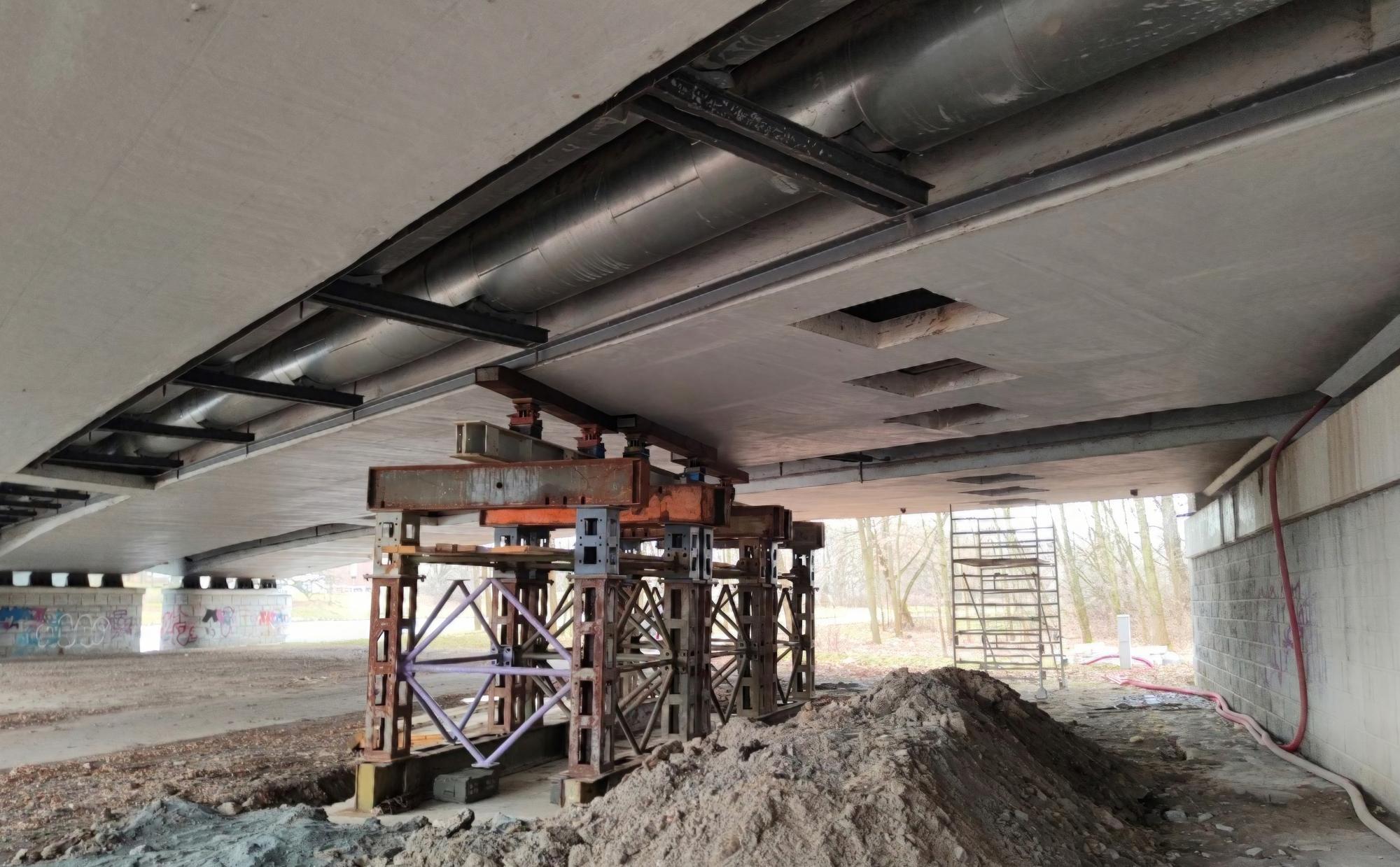
Instead of an early replacement, the prestressed concrete bridge Most Pavla Wonky in Pardubice was gradually retrofitted without interrupting traffic. A permanent structural dynamic monitoring system based on BRIMOS® Structural Health Monitoring represented the load-bearing behaviour in every construction phase in real time.
As part of the gradual retrofitting of the existing Most Pavla Wonky bridge in Pardubice, a complex infrastructure project was carried out without interrupting traffic. The aim was the sustainable restoration of the existing prestressed concrete bridge by replacing the external prestressing in the box girders – as an alternative to an early replacement structure.
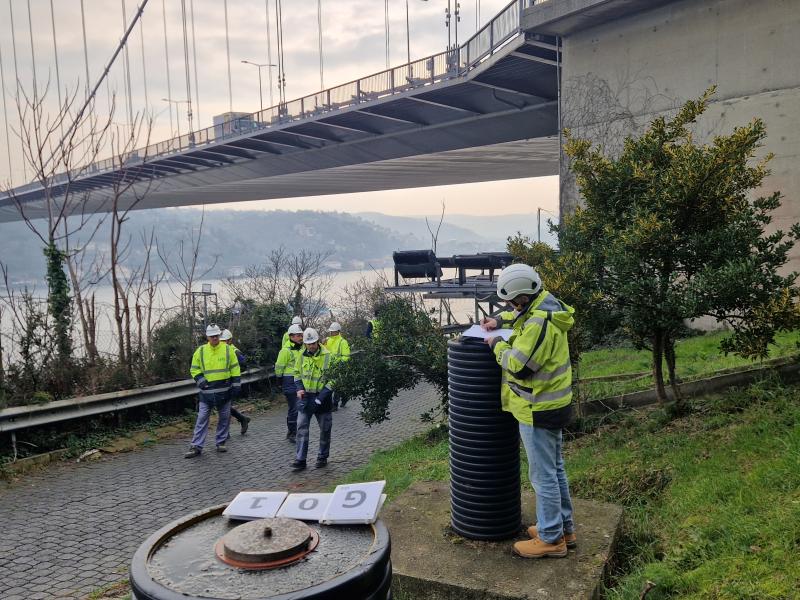
A permanent structural dynamic monitoring system was designed for the construction phases. The technology applied was BRIMOS® Structural Health Monitoring, which enabled continuous monitoring of the construction stages throughout the retrofitting measures. This was accompanied by the continuous evaluation of measurement data and the assessment of the load-bearing capacity during the construction phases.
In cooperation with further specialist partners, an integrated monitoring and evaluation concept was established, which represented the load-bearing behaviour during the various construction stages, any load redistributions and, in particular, the effectiveness of the bridge retrofitting in real time.

Monitoring allows us to quantitatively assess the structural response in every construction phase and to ensure structural safety during the retrofitting of the existing bridge. This provides essential decision support during the complex reconstruction process under full operation.
Technically, the focus was on the combination of a digital structural model, continuous sensor systems and the evaluation and engineering interpretation of measurement data in the context of the construction phases. This provided an essential basis for decision-making in the construction process during the gradual replacement of the external prestressing.
The project demonstrated the use of digital engineering in infrastructure projects, with data-based decision processes integrated directly into construction. The combination of monitoring, digital structural models and expert assessment enabled reliable supervision of the construction stages.
A considerable added value lay in the sustainable use of the existing infrastructure: retrofitting the existing structure considerably reduced the consumption of resources and avoided an early replacement. The project thus contributed to the strategic objective of planning infrastructure measures increasingly with regard to life-cycle considerations and resource efficiency.