Große Wendlinger Kurve
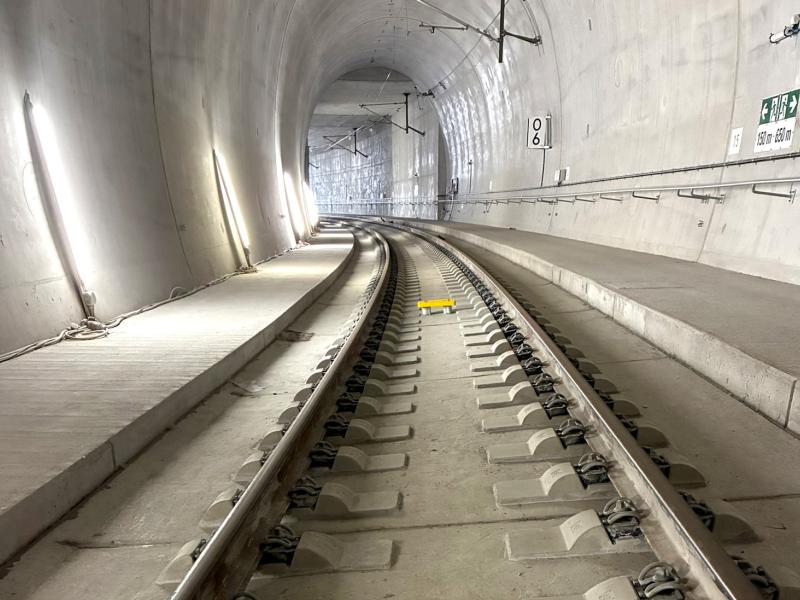
In the Große Wendlinger Kurve in Baden-Württemberg a non-reinforced ballast-less track of the system RHEDA 2000 was used in the tunnel area of the network of the German Railways for the first time. The field test examines whether specifically arranged reinforced saw-cut joints can replace the continuous longitudinal reinforcement usual up to now and which potentials arise for construction progress, material use and installation speed.
New Construction Method for the Ballast-less Track in the Tunnel
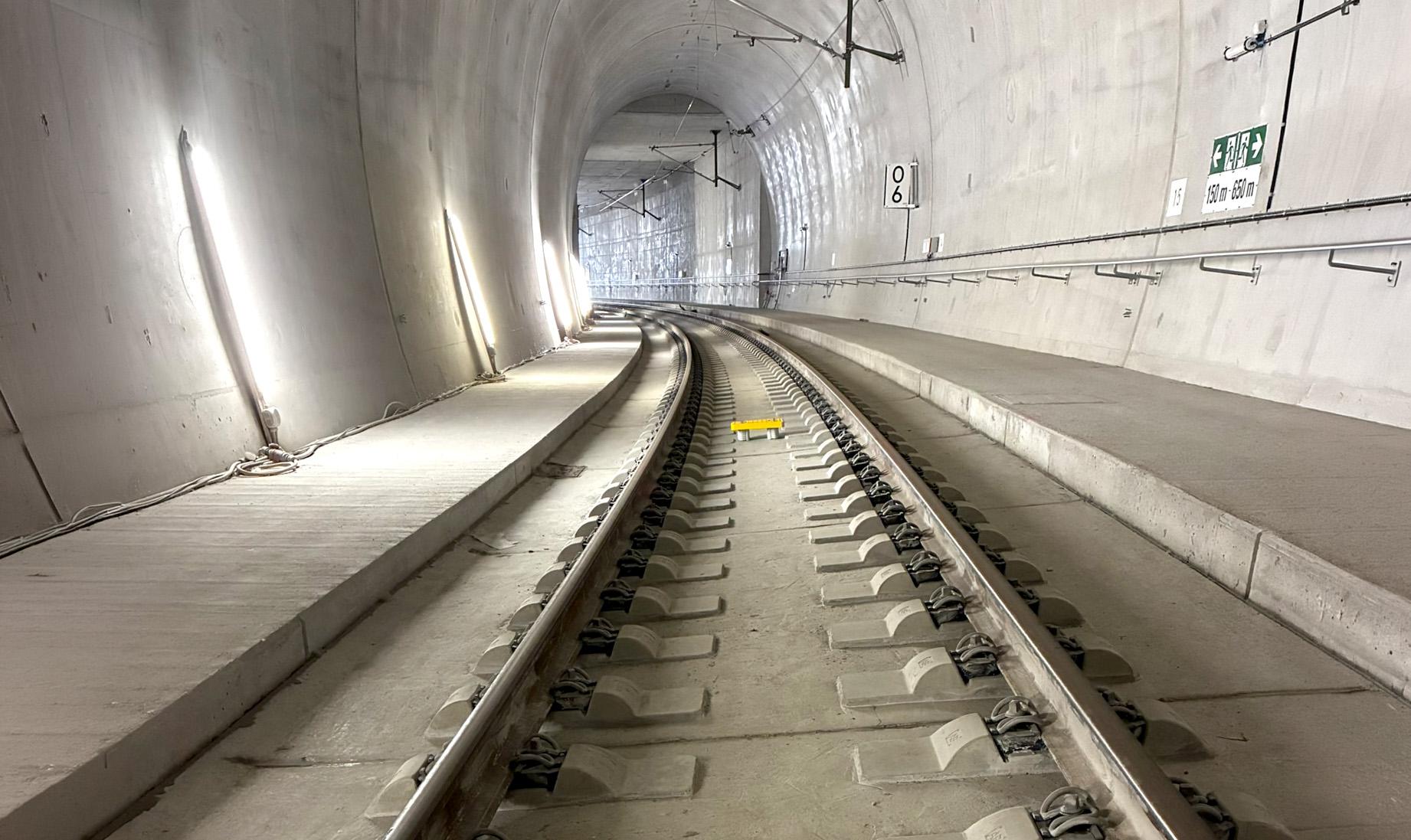
Since March 2024 a ballast-less track system with a special feature has been established in the project Große Wendlinger Kurve in Wendlingen am Neckar: a non-reinforced ballast-less track of the system RHEDA 2000 was used in the tunnel area of the network of the German Railways for the first time.
Planning is performed by ARGE Tunnel Wendlingen (Züblin – Max Bögl). FCP is assigned with the design of the ballast-less track. The experts of the department Railway Engineering around project manager Christof Gröstlinger are responsible for detailed structural design, as-built design, establishment of the service specifications and the documents for field testing.
Saw-cut Joints instead of Continuous Longitudinal Reinforcement
In the standard construction method RHEDA 2000 a continuous longitudinal reinforcement of approx. 60 kg of reinforcing steel per running metre has been provided up to now. In the project Große Wendlinger Kurve a concept with specifically arranged reinforced saw-cut joints is applied instead. The approach was derived from concrete road construction.
Within the scope of field testing, it is checked if you can do without the usual continuous longitudinal reinforcement with this construction. Above all the focus is on durability and crack behaviour of the structure under real operating conditions.

The Große Wendlinger Kurve connects a well-tried construction method with an advanced design approach.
Material Use and Construction Progress in the Focus
There is potential for material use and construction if you do without reinforcement. As the installation of reinforcement is completely omitted in the non-reinforced construction method, material can be saved. At the same time possibilities for a simplified construction progress and a higher installation speed are examined.
The solution is special also due to its historical connection to the RHEDA system: The original RHEDA system has emerged from concrete road construction. The non-reinforced construction method takes up this basic idea again and further develops it for application in ballast-less track systems.
Field Testing as Basis for Further Optimizations
Field testing shall show how non-reinforced structures behave under real operating conditions. Apart from durability and crack behaviour possible optimization potentials for future projects are examined.
The construction method could offer potential for more efficient manufacturing of very long tunnel structures. The prerequisite is that the demands regarding safety, quality and lifetime are met.
“The Große Wendlinger Kurve connects a well-tried construction method with an advanced design approach”, declares FCP project manager Christof Gröstlinger and continues, “The non-reinforced ballast-less track of the system RHEDA 2000 could be relevant for further projects in future.”
Fact-Box
Project
Ballast-less Track – Große Wendlinger Kurve
Location
Wendlingen am Neckar, Baden-Württemberg, Germany
Construction Period
03/2024 to 08/2026 (estimated)
Services
Design of ballast-less track: detailed structural design, as-built design, establishment of the service specifications and the documents for field testing
CCs Involved
CC Railway Engineering
Special Feature
A non-reinforced ballast-less track of the system RHEDA 2000 was used in the tunnel area of the network of the German Railways for the first time
Design Approach
Only specifically arranged reinforced saw-cut joints are used instead of continuous longitudinal reinforcement usual up to now
Objective of Field Testing
Examination of durability and crack behaviour under real operating conditions as well as of possible optimization potentials