We take a holistic view of the lifecycle of structures – from material selection through to use and eventual deconstruction.
The aim is the responsible use of resources, the reuse of building materials, and the reduction of waste. This encompasses deconstruction concepts, material passports, and life cycle assessments, as well as digital tools for ecological assessment – providing a solid basis for sustainable decisions.
- Circular Economy
- Deconstruction Concepts
- Materials & Building Products
- Green Building Envelopes
- Material Building Passport
- Life Cycle Assessment
- Ecological Lifecycle Analysis
All sectors of the construction industry can benefit from lifecycle analyses. Within our organisation, we bring together expertise from structural and civil engineering as well as measurement technology, to assess and optimise your project according to the requirements at hand.
Sustainable Building Materials
The range of building products is vast – and finding the best choice for your project can be a challenge. We help you compare individual products and identify the most sustainable option for your construction task. In doing so, we consider the entire lifecycle of the structure and evaluate the ecological index and deconstruction potential. We also have proprietary tools in this field that can utilise digital models (BIM, IFC) to carry out these calculations significantly faster.
Lifecycle – Structural Engineering
Life Cycle Analysis (LCA)
In structural engineering, life cycle assessment is a means of demonstrating how sustainable a building is. Such analyses typically form the basis for certifications and environmental funding. When combined with cost data and digital models, they also gain greater relevance in facility management. For these applications, we can offer the full spectrum: from carbon footprint calculations and the ecological index (OI3) to comprehensive life cycle assessment (LCA).
Life Cycle Costing (LCC)
Using lifecycle cost analysis based on ÖNORM B1801, a forecast is prepared of the monetary expenditure for the construction of a building, its subsequent operation (follow-on costs), and its demolition at the end of its useful life. During project processing, the forecast model is adapted to the specific project and various model adjustments are made in order to obtain the most accurate representation of building use possible (e.g. cleaning costs and intervals, building services, waste disposal, security concept, etc.). This requires close collaboration with the future occupants and/or the FM team from an early project phase onwards. Detailed option comparisons during the planning phases for individual building components or building services engineering elements enable the economic optimisation of a project.
The forecast of follow-on costs over the course of the building lifecycle is based largely, during the planning phase, on projections regarding price developments, consumption assumptions from building services engineering planning, and reference values for component service life. To evaluate the assumptions and projections made, regular review and updating of price escalation forecasts, energy consumption figures, and the general condition of the building is recommended (at intervals of 5–10 years). Based on these results, optimisations can be considered and decided upon during the operational phase of the building, which will have a positive impact on lifecycle costs.
Lifecycle – Civil Engineering
In civil engineering too, these analyses are carried out – for example during the planning stage as part of option studies aimed at minimising the ecological footprint – and are gaining increasing importance in asset management.
Our experts support you in:
- minimising costs (= LCC)
- maximising service life (= LCA)
- maximising infrastructure availability / minimising unavailability (indirect LCC analyses)
- maximising sustainability (carbon footprint)
In Life Cycle Management (= LCM), these aspects are incorporated into our optimisation analyses, which can be pursued strictly in monetary terms or weighted according to the criteria above. This allows far-reaching construction measures to be considered holistically and worked out during optimisation according to the defined weighting of priorities.
Using our non-destructive structural assessment technology (BRIMOS® Structural Health Monitoring), we make a significant contribution to sustainability in infrastructure evaluation – identifying:
- whether the extent of damage means there is genuine imminent risk (and a new structure should be pursued)
- or whether an often unnecessary new build can be avoided, and safe, reliable continued operation enabled instead through measured maintenance planning.
The technology has been successfully deployed for 30 years in a continuous cycle of R&D and practical application.
Timber Construction
If you want to realise your new property as ecologically and resource-efficiently as possible, a construction with the highest possible proportion of timber is the right choice. The use of timber components not only significantly improves the carbon footprint of a building, but construction time can also be optimised thanks to the high degree of prefabrication – saving both costs and on-site labour. With the right choice of structural systems, span widths, and construction details, timber construction becomes cost-competitive with solid construction. Our experts are happy to advise you.
Green Building Envelopes
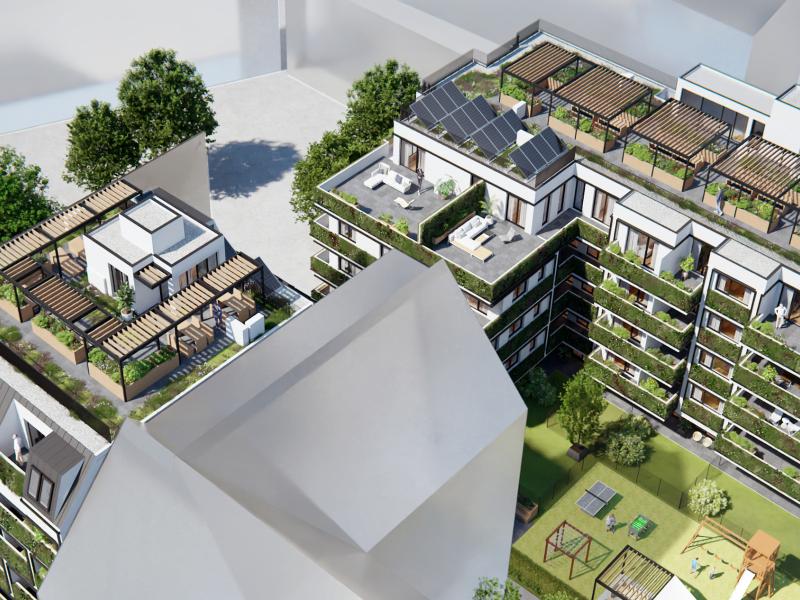
The planning process begins with defining a greening objective together with the client. This serves to establish key planning parameters and explores the various greening options with regard to both new builds and existing structures. Further planning is carried out in close coordination with building physics, structural engineering, and landscape architecture.
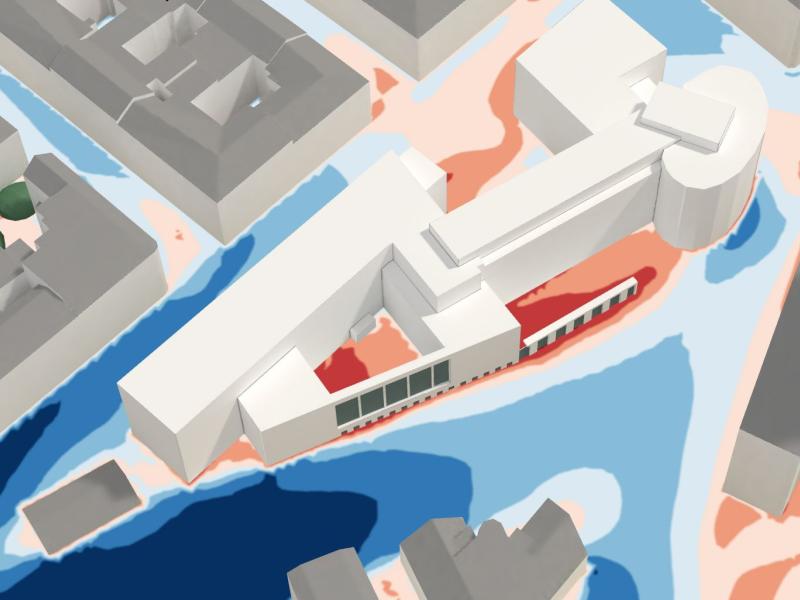
The ability to simulate microclimatic effects together with our partner offices completes an integral planning process.
Façade Greening
Whether a new build or an existing property, we are happy to support you in implementing your planned façade greening, taking all economic and technical parameters into account. This ensures the most suitable vegetation scenario for your project and the intended greening effects are identified.
Roof Greening
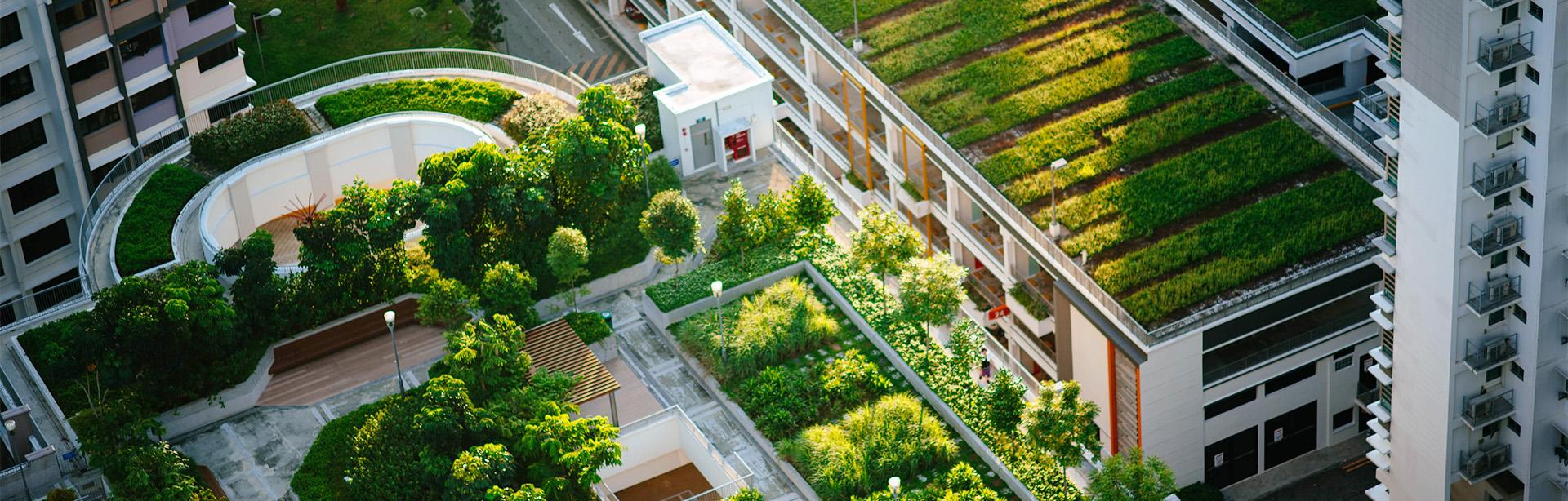
Flat or gently sloping roofs can very often be transformed into true green oases! In addition to enhancing the quality of the space, green roofs make an important contribution to the urban microclimate and rainwater management. We are happy to assess the possibilities of roof greening for your new build or existing structure, with particular regard to the desired greening objective and the relevant structural and building physics parameters.